




Call Us On
0086 13805968557
Address
Xilin Industrial District, Honglai Town, Quanzhou Nan 'an City, China

Apr 6,2026
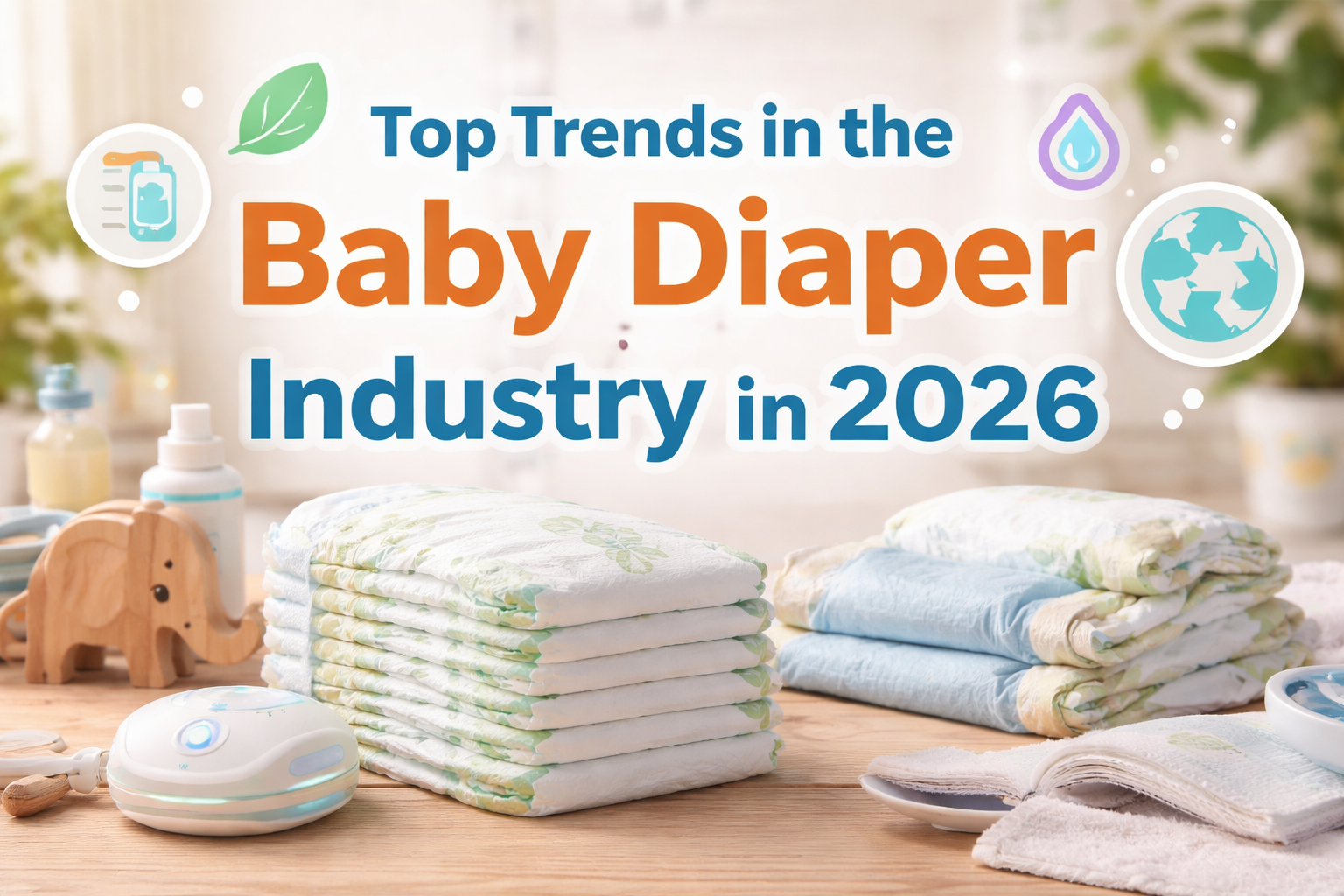
The baby diaper industry is evolving faster than ever before. Driven by innovation, sustainability concerns, and changing consumer expectations, 2026 is shaping up to be a transformative year for diaper manufacturers, retailers, and parents alike. Today’s caregivers are more informed, eco-conscious, and digitally connected—forcing brands to rethink how diapers are designed, marketed, and delivered.
In this comprehensive guide, we’ll explore the top trends in the baby diaper industry in 2026, uncovering what’s shaping the market and what businesses must do to stay competitive.
One of the most dominant trends in 2026 is the increasing demand for eco-friendly diapers. Parents are now prioritizing sustainability alongside performance.
Modern consumers are aware of the environmental impact of disposable diapers, which can take hundreds of years to decompose. As a result, brands are focusing on:
Eco-conscious diapers are no longer a niche—they’re becoming mainstream. Brands that fail to adapt risk losing relevance in a sustainability-driven market.
Technology is entering every aspect of parenting—including diapers.
Smart diapers are equipped with sensors that monitor:
These diapers connect to mobile apps, alerting parents in real-time.
Busy parents appreciate convenience and data-driven insights. In 2026, IoT-enabled baby care products are gaining traction, especially in urban markets.
Parents today are willing to spend more on quality, comfort, and safety.
The diaper market is moving away from purely price-driven decisions toward value-driven purchases.
Customization is becoming a powerful differentiator.
Parents want products tailored to their baby’s unique needs, making personalization a major competitive advantage.
The traditional retail model is being disrupted by direct-to-consumer diaper brands.
DTC brands are reshaping how diapers are sold, reducing reliance on large retail chains.
Convenience is king in 2026.
Parents receive diapers regularly based on usage patterns, eliminating the need for frequent store visits.
Subscription-based diaper services are becoming a standard offering, especially in developed markets.
Baby skin is extremely sensitive, and parents are more cautious than ever.
Parents are prioritizing health and safety over price, making skin-friendly diapers a must-have.
While developed markets are maturing, emerging economies are fueling industry expansion.
Babdy Diaper Brands targeting these regions can achieve significant growth by offering affordable yet high-quality products.
Performance remains a critical factor in diaper selection.
Parents expect diapers to deliver maximum dryness and comfort, especially during long hours.
Modern parents value transparency.
Brands that communicate openly build stronger trust and loyalty with consumers.
Online shopping continues to dominate the diaper market.
E-commerce allows brands to reach wider audiences while offering convenience to parents.
Retailers are launching their own diaper brands to compete with established players.
Private labels are increasing competition and pushing innovation across the industry.
Despite premiumization, affordability remains crucial.
Parents are looking for the best balance between price and performance.
Governments are enforcing stricter regulations on baby products.
Compliance is no longer optional—brands must meet global standards to remain competitive.
Inclusivity is influencing product design in 2026.
Brands embracing inclusivity resonate better with modern families.
The baby diaper industry in 2026 is undergoing a remarkable transformation fueled by innovation, sustainability, and evolving consumer expectations. From eco-friendly materials and smart diapers to subscription models and premium offerings, the landscape is more dynamic than ever.
For businesses, the message is clear: adapt or fall behind. Brands that invest in sustainability, embrace technology, and prioritize customer experience will lead the market. Meanwhile, parents benefit from safer, smarter, and more convenient diaper solutions tailored to their needs.
As the industry continues to evolve, one thing remains certain—the future of baby diapers is not just about functionality, but about creating value, trust, and sustainability for the next generation.


Xilin Industrial District, Honglai Town, Quanzhou Nan 'an City, China