




Call Us On
0086 13805968557
Address
Xilin Industrial District, Honglai Town, Quanzhou Nan 'an City, China

Apr 21,2026
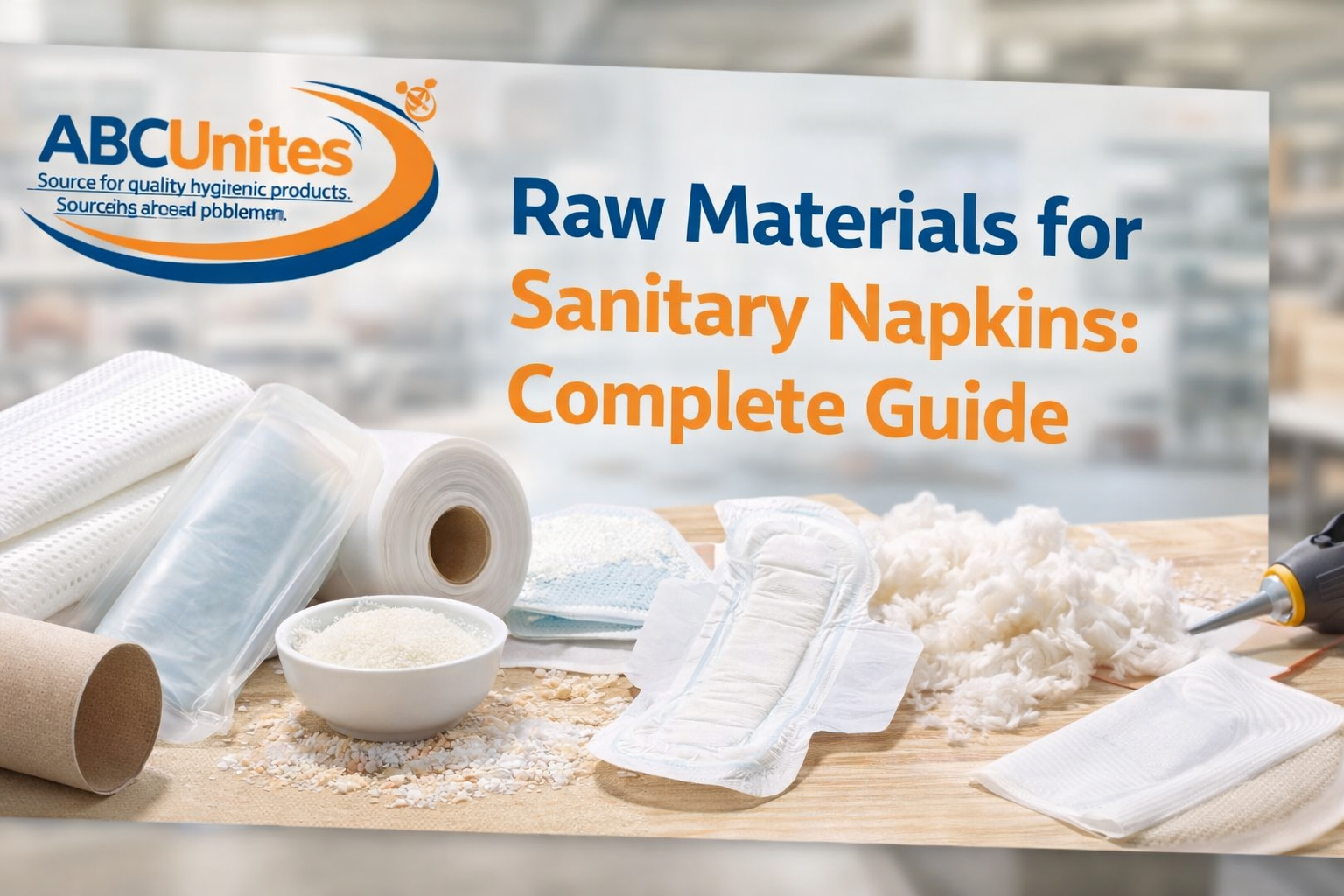
In the highly competitive feminine hygiene industry, understanding the raw materials for sanitary napkin production is critical for manufacturers, private label brands, and bulk buyers. Whether you are sourcing components, building your own production line, or evaluating suppliers, the quality and consistency of raw materials directly impact product performance, cost efficiency, and brand positioning.
Sanitary pads are engineered hygiene products composed of multiple functional layers. Each layer requires specialized materials designed for absorption, comfort, leakage control, and skin safety. For B2B buyers, the key lies not only in identifying these materials but also in selecting reliable suppliers, optimizing costs, and ensuring compliance with international quality standards.
This comprehensive guide provides a commercial and technical breakdown of the raw materials used in sanitary napkin manufacturing, along with sourcing insights and industry best practices.
A sanitary napkin typically consists of 6–8 layers, each serving a specific function. The most common structure includes:
For manufacturers, optimizing each layer using the right raw materials for sanitary napkin production ensures product differentiation and long-term scalability.
The top sheet is the first point of contact with the user and plays a crucial role in comfort and hygiene perception.
Most large-scale manufacturers source nonwoven fabrics in jumbo rolls. Asian markets, especially China and Southeast Asia, dominate supply due to cost efficiency and production scale.
The ADL is a performance-enhancing layer that improves fluid intake and distribution across the absorbent core.
High-quality ADL materials are often sourced from specialized hygiene material suppliers. Consistency in thickness and permeability is critical for large-scale production.
The absorbent core is the most critical component in sanitary napkin manufacturing. It determines absorption capacity, retention, and overall product efficiency.
When sourcing raw materials for sanitary napkin, the absorbent core components require strict quality control and long-term supplier agreements.
The back sheet prevents leakage and provides structural integrity to the sanitary pad.
Breathable back sheets are increasingly preferred in premium products due to improved comfort and reduced skin irritation.
Adhesives are used to secure the sanitary pad to underwear and ensure stability during use.
Adhesive quality directly affects customer satisfaction. Poor adhesive performance can lead to product failure and brand damage.
The release liner protects the adhesive before use and ensures easy application.
Although low in cost, the release liner is essential for maintaining product usability and packaging efficiency.
Wings and side barriers provide additional protection and improve product fit.
Packaging is a critical part of sanitary napkin manufacturing, especially for private label and OEM brands.
Sustainable packaging is gaining traction, particularly in North America and Europe.
The global hygiene market is shifting toward sustainable alternatives. Buyers are increasingly looking for eco-conscious raw materials for sanitary napkin production.
Eco-friendly sanitary pads command higher margins but require:
When evaluating suppliers for raw materials for sanitary napkin, consider the following:
Ensure batch-to-batch uniformity, especially for nonwoven fabrics and SAP.
Look for:
Choose suppliers with:
Balance price with performance. Low-cost materials may increase defect rates.
For private label brands, suppliers should offer:
Important for entering premium and international markets.
For manufacturers, understanding cost distribution helps in pricing and profitability.
The absorbent core is the most expensive component, making SAP pricing a key factor in overall production cost.
Before finalizing suppliers, manufacturers should conduct rigorous testing of all raw materials for sanitary napkin production.
Consistent quality control ensures compliance with international hygiene standards and reduces product recalls.
To stay competitive in the sanitary napkin market:
The selection of raw materials for sanitary napkin manufacturing is a strategic decision that directly impacts product quality, cost structure, and market positioning. From nonwoven top sheets and absorbent cores to adhesives and packaging, every component plays a vital role in delivering a reliable and competitive product.
For B2B buyers, manufacturers, and private label brands, success lies in sourcing high-quality materials, maintaining supply chain consistency, and aligning product development with evolving consumer preferences—especially in sustainability and comfort.
As the global hygiene market continues to grow, businesses that invest in advanced materials and strong supplier networks will gain a clear competitive advantage.


Xilin Industrial District, Honglai Town, Quanzhou Nan 'an City, China